Turn China complexity into a clear GROWTH decision.

Aquarc helps international SMEs build real traction in China's digital ecosystem - Douyin, RedNote, WeChat, and local partners.
Without needing an in-house China team.
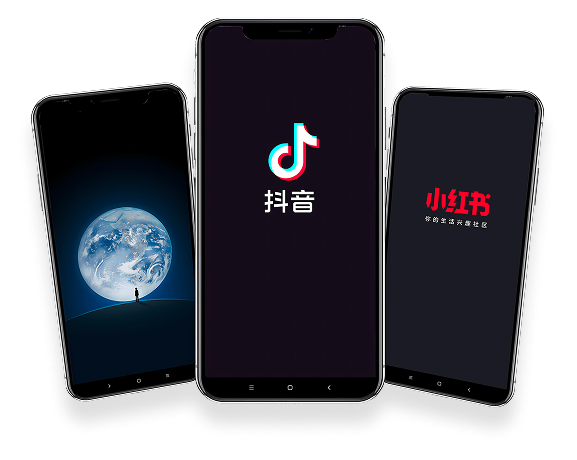
Douyin and RedNote (Xiaohongshu) shown on mobile devices

16+ years

Operating across China's B2B and B2C markets.

5+ platforms

Douyin WeChat RedNote (Xiaohongshu) Tmall JD.com

9+ brands

Guided into China's digital ecosystem.

China strategy, grounded in
16 years of hands-on market experience.

Hi, I'm Bonnie Ma.

Since 2010, I've worked at the front of China's fast-moving digital ecosystem, helping brands navigate both consumer and business markets.

I built my own brand, IMPOKER, and expanded it to more than ten countries. I have also partnered with international brands including adidas on localized, data-led growth.

At Aquarc, I work directly with founders and growth leads to turn “China interest” into a credible plan, measurable demand and durable local capability.

Founder Signature of Bonnie Ma
Bonnie Ma

What we do

Integrated capabilities for China growth

China Growth Strategy

Find the most credible path to grow in China.

We turn market complexity into clear decisions on demand, positioning, channels and readiness, before you commit significant time and budget.

Market ResearchPositioningReadinessGrowth Roadmap
01

Market & Consumer Intelligence

Understand consumer demand, category dynamics, emerging trends and the competitive landscape.

02

Positioning & China Localization

Translate your brand story, product value and visual language into a proposition that makes sense in China.

03

Growth Roadmap & Market Readiness

Prioritize platforms, entry models, regulatory requirements, on-the-ground realities and the next steps required to move forward.

How we work together

From first call to live operations

  1. 1

    Discovery call

    30 minutes · no cost

    What you are trying to do, what you have already tried, and what is actually blocking it.

  2. 2

    Market read

    1–2 weeks

    Marketing strategy recommendation, platform selection, budget projection, and realistic timeline.

  3. 3

    Sequenced plan

    1–3 months

    Entity registration, store build, content creation, how deep localization has to go, and what proof to look for before you spend more.

  4. 4

    Ongoing Operations

    90 days +

    Run the first sprint with us, or take the plan to your own team after the first sprint.

Insights

Field notes from China's digital market

View all insights
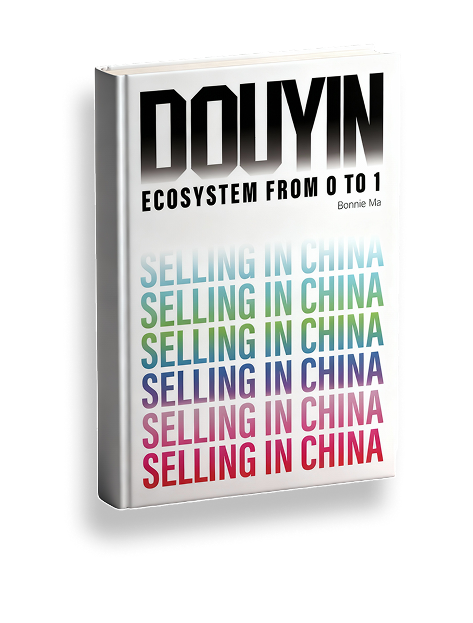
Douyin Ecosystem from 0 to 1 book cover

Your BlueprintDouyin

Douyin Ecosystem from 0 to 1

Everything about Douyin - China version of TikTok, the hottest e-commerce platform, and how you can lead your brand on this spectacular ever-growing platform!

Check out the playbook

FAQ

Common questions

How do we know if our brand is actually ready for China?

Readiness has less to do with product quality than with whether you can survive twelve months of ambiguity. Three things tend to predict it: a product that already sells outside its home market without heavy explanation; someone senior who can make China decisions without assembling a committee; and budget you can hold for four quarters rather than one campaign. If one of the three is missing, the honest answer is usually “not yet” — and finding that out early is worth more than an entry plan.

What does it realistically cost to test China, and over what timeline?

What we publish is a ratio rather than a price: before you commit 100K to China, spend 10K establishing whether the 90K should be spent at all. A market read takes 1–2 weeks. A sequenced plan takes 1–3 months. A first sprint that produces real market evidence takes about 90 days. Anyone who quotes you a China budget before understanding your category and how it gets bought is quoting a template.

Do we need a Chinese entity, or can we start cross-border?

For most brands testing demand, cross-border is the lower-risk starting point: it avoids entity setup and lets you find out whether Chinese consumers want the product before you commit to a legal and tax structure built to serve them. A local entity starts paying for itself once China becomes a sustained revenue line rather than a test — typically when domestic payment, logistics speed, or contracts with local retail partners become the constraint. The mistake is treating this as a legal question first. It is a demand question first, and a legal one second.

Which platform should we start on?

The useful question is not which platform is biggest, but whether your category forms through discovery or through search. Products people research before buying behave very differently from products people see and immediately want. Starting on the wrong platform is the most expensive early mistake, because it produces activity that looks like progress for about six months before the absence of results becomes undeniable.

Why posting consistently on RedNote isn't growing your brand →

We already have a distributor in China. Do we still need this?

Often yes, though for a different reason than you would expect. A distributor sells your product; it does not build your presence, and it rarely returns the customer data that explains why things are or aren't working. If the relationship is producing revenue but no visibility, the gap is usually narrative and discovery, not sales coverage. We work with the brand directly, not through the distributor.

We're already in China but growth has stalled. Where do you usually find the problem?

Usually in sequencing or localization depth, rather than in spend. Increasing budget against the wrong sequence reliably increases cost without changing the outcome. The three most common findings: the brand sits on a platform that doesn't match how its category is discovered; localization stopped at translation; or the content is optimized for reach in a category that converts through saved posts and search.

Why Chinese KOL campaigns don't move sales →

Get Started

Ready to accelerate your China growth?

We usually reply within 1-2 business days. Your details are used only to respond to your inquiry.

Tell us about your China goals, and we'll map your next 90 days.

Whether you're exploring China or already active and looking for acceleration, share a few details. We'll respond with an honest view of what's realistic, and a suggested starting point.

How engagements typically start

1. You share your goals, current activity, and constraints.
2. We review and suggest one or two pragmatic starting points.
3. If there's a fit, we run a short workshop and confirm a 60-90 day plan.

What we're a good fit for

1. International SMEs with proven products or services.
2. Teams willing to commit for at least 3-6 months.
3. Leaders who value clear metrics and honest feedback over "hype".